







BS – Early Childhood Education
Empowering future educators with the knowledge, skills, and passion to inspire learners, shape communities, and create a brighter future through quality education.

Bachelor of Early Childhood Education (BECEd)
Inspiring Minds, Shaping Tomorrow's Educators
The Bachelor of Early Childhood Education (BECEd) is one of the academic programs offered by Tubod College, a local college committed to providing accessible, relevant, and quality higher education that responds to the educational and developmental needs of the Municipality of Tubod and the Province of Lanao del Norte. The program is designed to prepare competent, compassionate, reflective, and innovative professional teachers who are equipped with the knowledge, skills, and values necessary to facilitate the holistic development and learning of children from birth through the early elementary years.
Curriculum
Competency-based curriculum for future-ready educators.
Teaching
Innovative, student-centered teaching for lifelong learning.


Overview of the Program
The Bachelor of Early Childhood Education (BECEd) is one of the academic programs offered by Tubod College, a local college committed to providing accessible, relevant, and quality higher education that responds to the educational and developmental needs of the Municipality of Tubod and the Province of Lanao del Norte. The program is designed to prepare competent, compassionate, reflective, and innovative professional teachers who are equipped with the knowledge, skills, and values necessary to facilitate the holistic development and learning of children from birth through the early elementary years.
Established in 2018, the BECEd program was founded in response to the increasing demand for qualified early childhood educators and to support national efforts in strengthening early childhood care and education. Since its inception, the program has been committed to producing graduates who are academically prepared, professionally competent, ethically grounded, and socially responsive, capable of creating developmentally appropriate, inclusive, child-centered, and play-based learning environments.
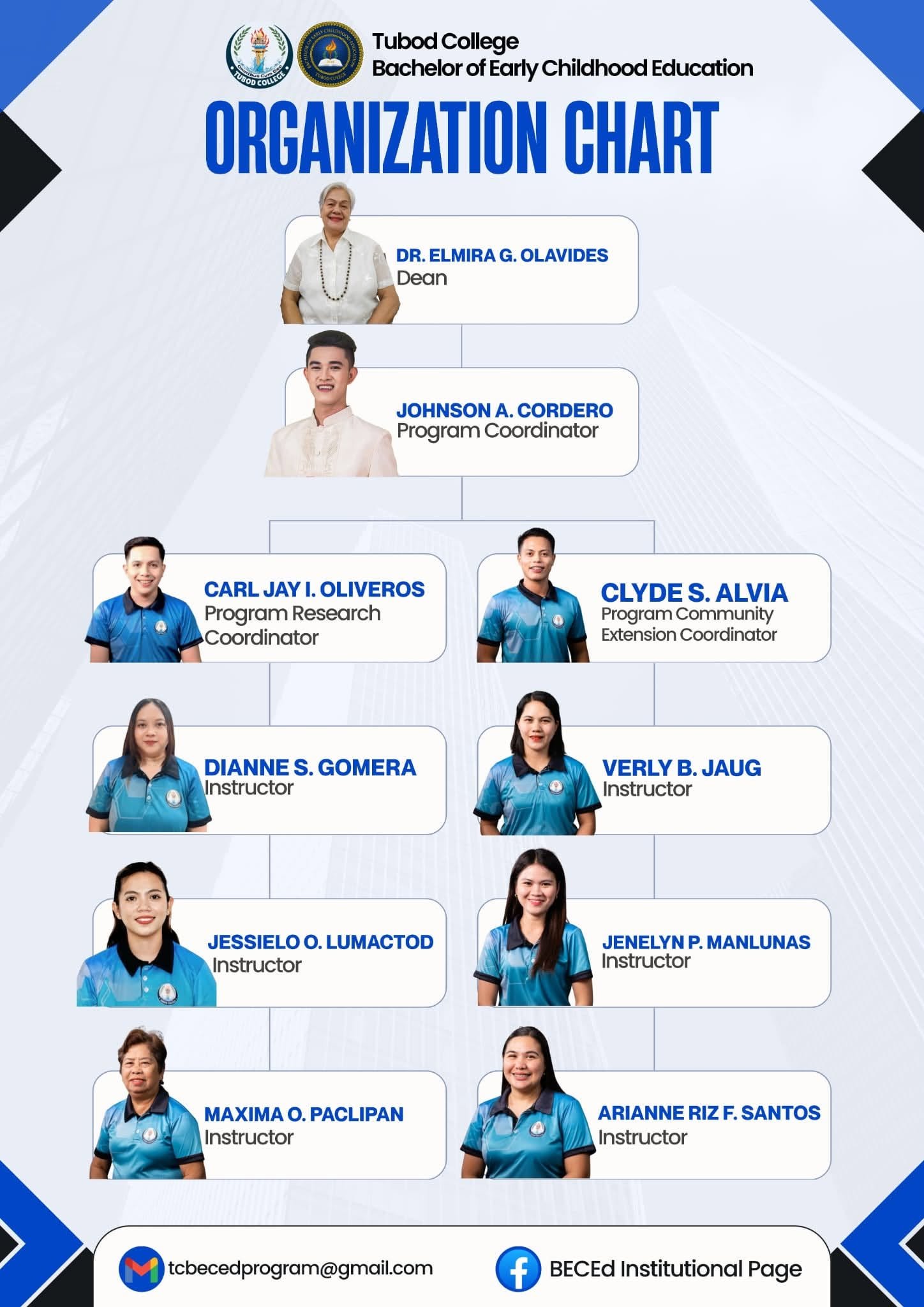
Dean of Program
The program was initially led by Dr. Elmira G. Olavides, a former Schools Division Supervisor of the Department of Education, Division of Lanao del Norte, who served as the first Dean of the program. Through her leadership and educational expertise, the program established a strong academic foundation, developed quality instructional practices, and aligned its curriculum with the standards prescribed for teacher education programs.
Asignificant milestone in the program's development was the issuance of the Certificate of Program Compliance (COPC) by the Commission on Higher Education on May 30, 2022, signifying that the Bachelor of Early Childhood Education program had satisfactorily complied with the policies, standards, and guidelines prescribed for higher education institutions offering the degree. This recognition strengthened the institution's commitment to delivering quality teacher education and ensuring continuous compliance with national quality assurance standards.
Program Coordinator
In 2024, Mr. Johnson A. Cordero was appointed as the Program Coordinator of the Bachelor of Early Childhood Education. Under his leadership, the program has continued to strengthen its academic operations through curriculum enhancement, faculty development, instructional innovation, student support services, research initiatives, extension programs, and continuous quality improvement. The program likewise continues to foster collaborative partnerships with educational institutions and stakeholders to enrich the professional preparation of future early childhood educators.
College Program
The program has demonstrated remarkable excellence in teacher education through its outstanding performance in the Board Licensure Examination for Professional Teachers (BLEPT). During the March 2025 examination, the BECEd program produced its first batch of licensed professional teachers and achieved a 78.57% institutional passing rate, significantly surpassing the 46.77% national passing rate. This achievement was further strengthened by an outstanding 1 00% passing rate in the S eptember 2025 BLEPT, followed by an impressive 94.44% passing rate in the March 2026 BLEPT. These accomplishments reflect the program’s commitment to academic excellence, effective instruction, quality student preparation, and continuous improvement.
Beyond excellence in licensure examinations, one of the distinguishing best practices of the Bachelor of Early Childhood Education program is its strong emphasis on research publication. The program actively cultivates a culture of inquiry among faculty members and students by encouraging the conduct of quality educational research, presentation of scholarly works in research conferences, and publication of studies in institutional, national, and international academic journals. Research is recognized as an essential component of professional development and evidence-based educational practice, enabling future educators to become reflective practitioners who contribute meaningful solutions to contemporary issues in early childhood education.
The Bachelor of Early Childhood Education program embraces an outcomes-based and learner-centered approach to teaching and learning that integrates theory, research, technology, community engagement, and extensive field experiences. Through rigorous coursework, Field Study, TeachingAssistantship, andTeaching Internship, students are provided with meaningful opportunities to develop professional competencies, ethical values, leadership skills, and lifelong learning habits expected of future educators.
Astheprogram continuesto grow,theBachelorof EarlyChildhoodEducationatTubod College remains steadfast in its commitment to producing highly competent, innovative, research-oriented, and value-driven educators who can make significant contributions to early childhood education, nation-building, and the sustainable development of communities.
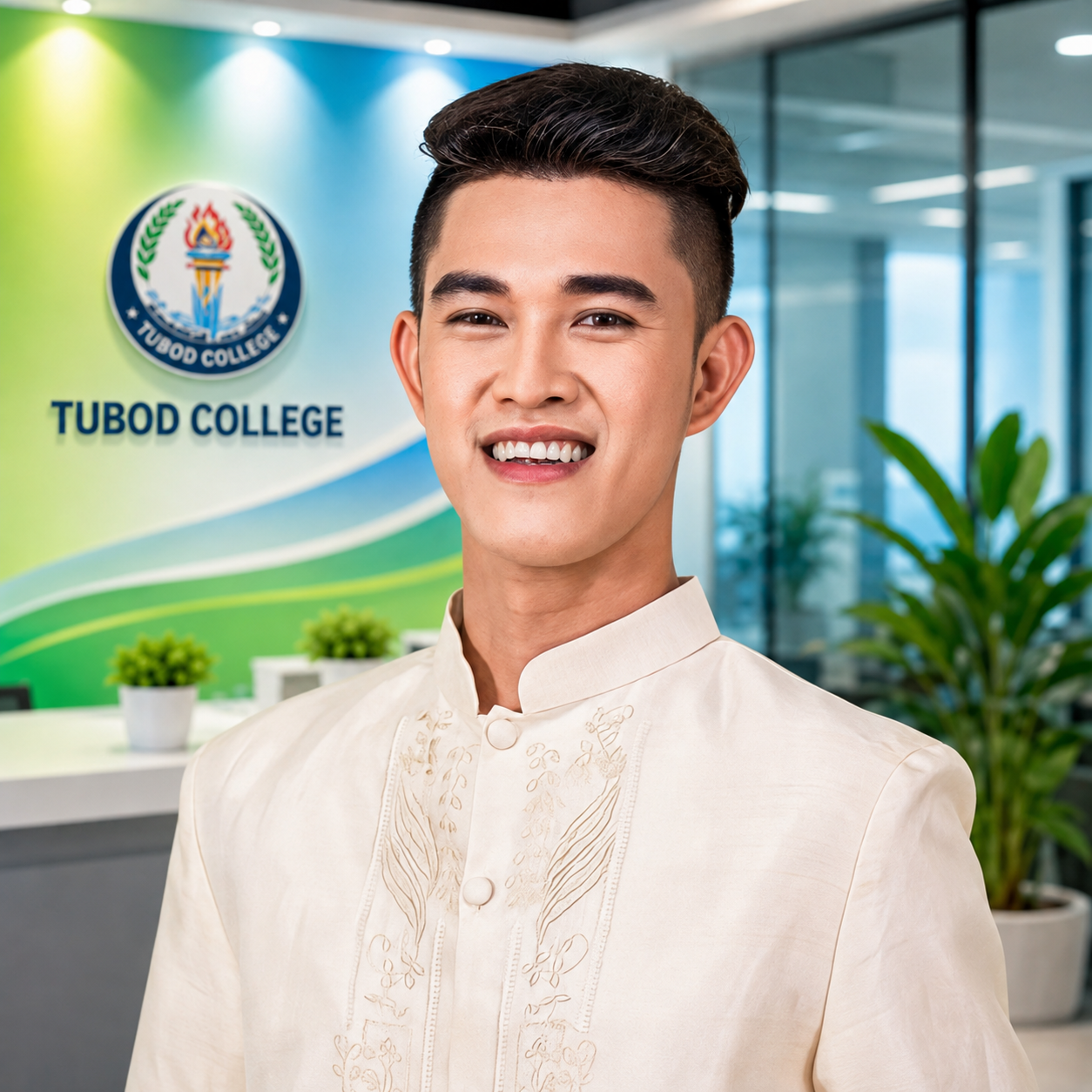
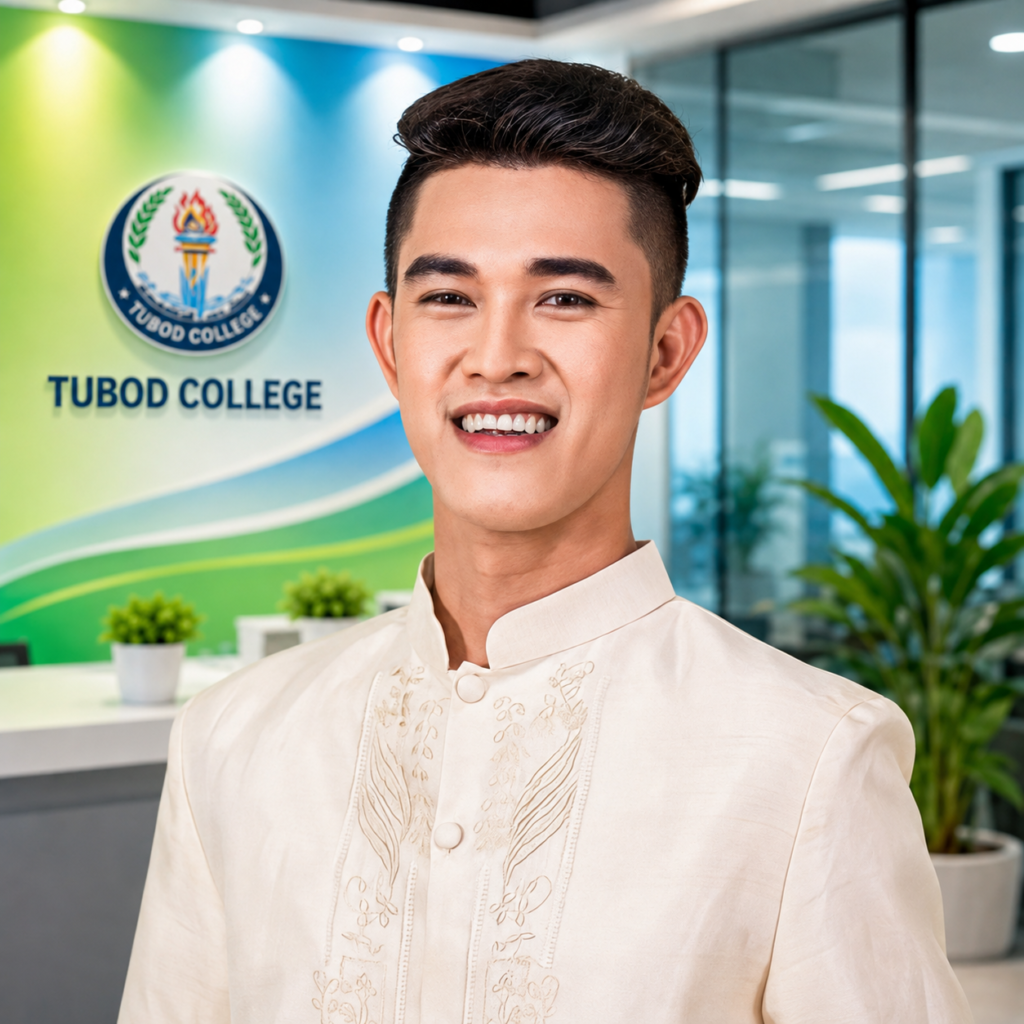
Johnson A. Cordero, LPT, MAEd
Program Coordinator - BECEd
BECEd Institutional Page
Message of the Program Coordinator
Warm greetings and welcome to the Bachelor of Early Childhood Education (BECEd) Program of Tubod College!
It is my great honor and privilege to welcome you to a program that is dedicated to shaping future educators who will inspire, nurture, and transform the lives of young children. Since its establishment in 2018, the Bachelor of Early Childhood Education program has remained steadfast in its commitment to providing quality teacher education grounded in academic excellence, professional competence, ethical leadership, and compassionate service.
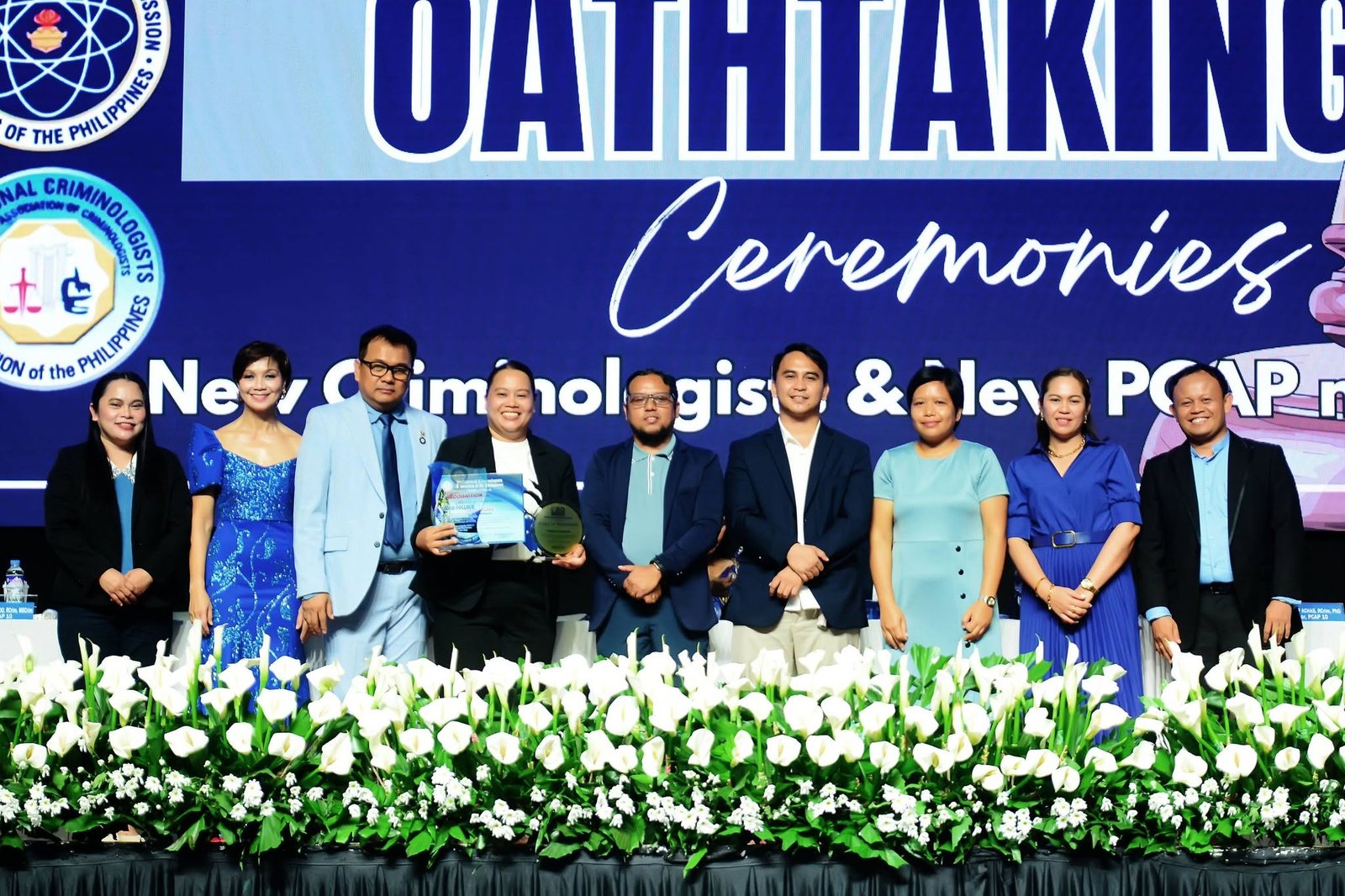
Our journey has been marked by significant milestones—from earning the Certificate of Program Compliance (COPC) from the Commission on Higher Education in 2022 to consistently achieving outstanding results in theBoard Licensure Examination for Professional Teachers. These accomplishments reflect the unwavering dedication of our faculty, students, alumni, and institutional leaders in pursuing excellence in early childhood teacher education.
At BECEd Tubod College, we believe that every child deserves a teacher who is knowledgeable, caring, innovative, and committed to lifelong learning. Guided by this belief, we provide meaningful learning experiences that integrate theory and practice through developmentally appropriate instruction, research, community engagement, Field Study, Teaching Assistantship, and Teaching Internship. We also take pride in fostering a strong culture of research and scholarly publication, empowering both faculty members and students to contribute to the advancement of early childhood education through evidence-based practices and educational innovation.
In our department, we are committed to continuously strengthening our academic programs, promoting excellence in instruction, supporting student success, and building meaningful partnerships that will further elevate the quality of our program. Together, let us continue to cultivate an academic community that values integrity, innovation, collaboration, and service to society.
Whether you are a prospective student, a current learner, a parent, an alumnus, a partner institution, or a visitor to our page, I warmly invite you to become part of our growing BECEd family. May this platform serve as a gateway to our achievements, programs, activities, and opportunities as we continue our shared mission of preparing competent, compassionate, and globally responsive early childhood educators.
Welcome to the Bachelor of Early Childhood Education Program of Tubod College—where future educators begin their journey of inspiring young minds and shaping a brighter future.
Omnibus Cum Deo!
Empowering Communities!
JOHNSONA. CORDERO, LPT, MAEd
Program Coordinator - BECEd
Curriculum Overview
The Bachelor of Early Childhood Education (BECEd) curriculum of Tubod College is designed to develop competent, ethical, research-oriented, and globally responsive early childhood educators who are equipped with the necessary knowledge, pedagogical competencies, and professional values to effectively facilitate the holistic growth and development of children from birth to eight years old.
The curriculum is anchored on the principles of Outcome-Based Education (OBE)and is implemented in accordance with the Commission on Higher Education (CHED) Memorandum Order (CMO) No. 73, Series of 2017, otherwise known as the Policies, Standards, and Guidelines (PSG) for the Bachelor of Early Childhood Education Program. The curriculum emphasizes the integration of theoretical foundations, pedagogical competence, experiential learning, research, innovation, and community engagement to prepare future educators capable of responding to the evolving demands of early childhood education.
On J une 21, 2023, the C ommission on Higher Education (CHED) issued a Content Noted on the Program of Studies of the Bachelor of Early Childhood Education program of Tubod College, affirming the institution’s implementation of the prescribed curriculum structure and academic requirements.
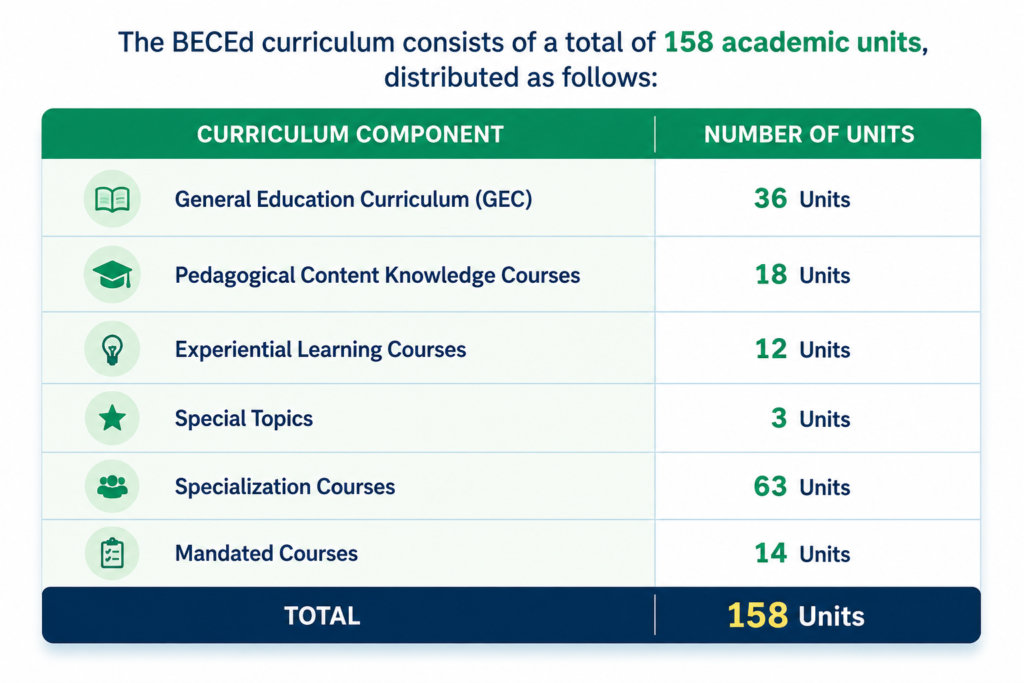
Each component is carefully structured to ensure the progressive development of students’ competencies—from acquiring foundational knowledge and professional education concepts to applying pedagogical theories through extensive field experiences, research, and internship
Philosophy of the Curriculum
The Bachelor of Early Childhood Education curriculum is founded on the belief that every child possesses unique potential that flourishes in nurturing, inclusive, and
developmentally appropriate learning environments. It recognizes that effective teachers are lifelong learners, reflective practitioners, advocates for children’s rights, and agents of positive social transformation.
The curriculum embraces a learner-centered, competency-based, and outcomes-driven philosophy that integrates academic rigor with authentic learning experiences. It promotes holistic child development through play-based, inquiry-based, and culturally responsive pedagogies while fostering ethical leadership, collaboration, innovation, research competence, and community engagement. Through this philosophy, the program prepares future educators who can respond to the diverse needs of children, families, and communities in both local and global contexts.
Program Educational Objectives (PEOs)
Within three to five years after graduation, graduates of the Bachelor of Early Childhood Education program are expected to:
- PEO 1. Demonstrate service orientation and professional commitment in their respective professions through ethical, responsible, and learner-centered educational practice.
- PEO 2. Qualify for various types of employment and actively participate in community development initiatives, professional engagements, and public discourses that respond to the educational and developmental needs of society.
- PEO 3. Contribute to the generation of new knowledge through active participation in research, innovation, and development projects that advance the field of early childhood education.
Program Outcomes
Upon completion of the program, graduates are expected to:
- 1. Demonstrate a high level of content knowledge and pedagogical competence in early childhood education.
- 2. Demonstrate appreciation for diversity by creating inclusive, equitable, and culturally responsive learning environments.
- 3. Manifest collaborative skills through effective teamwork, communication, and partnership with families, colleagues, and community stakeholders.
- 4. Demonstrate innovative thinking in designing meaningful, creative, and developmentally appropriate learning experiences.
- 5. Possess critical thinking and problem-solving skills necessary for addressing educational challenges and improving teaching practices
- 6. Advocate for children's rights, equity, community development, nationalism, and democratic ideals through ethical and socially responsible professional practice.
- 7. Pursue lifelong learning by engaging in continuous professional development, research, reflective practice, and innovation.
The Bachelor of Early Childhood Education program adopts a learner-centered and outcomes-based approach to instruction that encourages active participation, critical reflection, creativity, and professional competence. Faculty members employ diverse and evidence-based teaching strategies to ensure meaningful learning experiences that bridge theory and practice. The program utilizes the following teaching and learning approaches:
- Outcome-Based Education (OBE) ensure alignment among learning outcomes, instructional strategies, and assessment.
- Learner-Centered Instruction that recognizes students as active participants in thelearning process.
- Developmentally Appropriate Practice (DAP) in accordance with children’s developmental stages and individual needs.
- Play-Based Learning as a primary instructional approach in early childhood education.
- Inquiry-Based and Problem-Based Learning to promote higher-order thinking and reflective practice.
- Experiential Learning through laboratory activities, simulations, observations, Field Study, Teaching Assistantship, and Teaching Internship.
- Collaborative Learning through cooperative activities, peer teaching, and professional learning communities.
- Research-Based Instruction that integrates educational research into classroom practice and encourages scholarly inquiry.
- Technology-Enhanced Learning utilize digital platforms, multimedia resources, and educational technologies to enrich teaching and learning.
- Community-Based Learning through extension activities, service learning, and partnerships with schools and community organizations.
These approaches ensure that graduates develop not only strong academic foundations but also the practical competencies, leadership qualities, and professional dispositions expected of beginning early childhood educators.
Alignment with National and Global Standards
The Bachelor of Early Childhood Education curriculum is aligned with national educational policies and international frameworks that promote quality teacher education and lifelong learning.
At the national level, the curriculum complies with CHED Memorandum Order No. 73, Series of 2017, the Philippine Professional Standards for Teachers (PPST), the Philippine Qualifications Framework (PQF), and relevant policies governing teacher education and early childhood development. These standards ensure that graduates possess the competencies expected of beginning professional teachers and meet the requirements for professional licensure and practice.
Globally, the curriculum supports the United Nations Sustainable Development Goal 4 (Quality Education) by preparing competent educators who contribute to inclusive, equitable, and quality education for all. It likewise embraces principles of inclusive education, child protection, children's rights, diversity, sustainability, innovation, and lifelong learning, enabling graduates to address contemporary educational challenges within both local and international contexts.
In Summary, the Bachelor of Early Childhood Education curriculum of Tubod College reflects the institution's unwavering commitment to producing competent, ethical, innovative, and research-oriented early childhood educators. Grounded in national standards and responsive to global educational developments, the curriculum provides students with a balanced and comprehensive learning experience that integrates foundational knowledge, pedagogical expertise, experiential learning, research, community engagement, and professional practice.
Through continuous curriculum enhancement, quality assurance initiatives, and strong partnerships with stakeholders, the program remains committed to preparing future educators who are equipped to nurture young learners, advocate for children's rights and well-being, contribute to educational research and innovation, and become transformative leaders in the field of early childhood education.
Meet Our Educators
Johnson A. Cordero, LPT, MAEd
Program Coordinator - BECEd

Carl Jay I. Oliveros
Program Research Coordinator

Clyde S. Alvia
Program Community Extension Coordinator

Dianne S. Gomera
Instructor

Berly B. Jaug
Instructor

Jessielou O. Lumactud
Instructor

Jenelyn P. Manlunas
Instructor
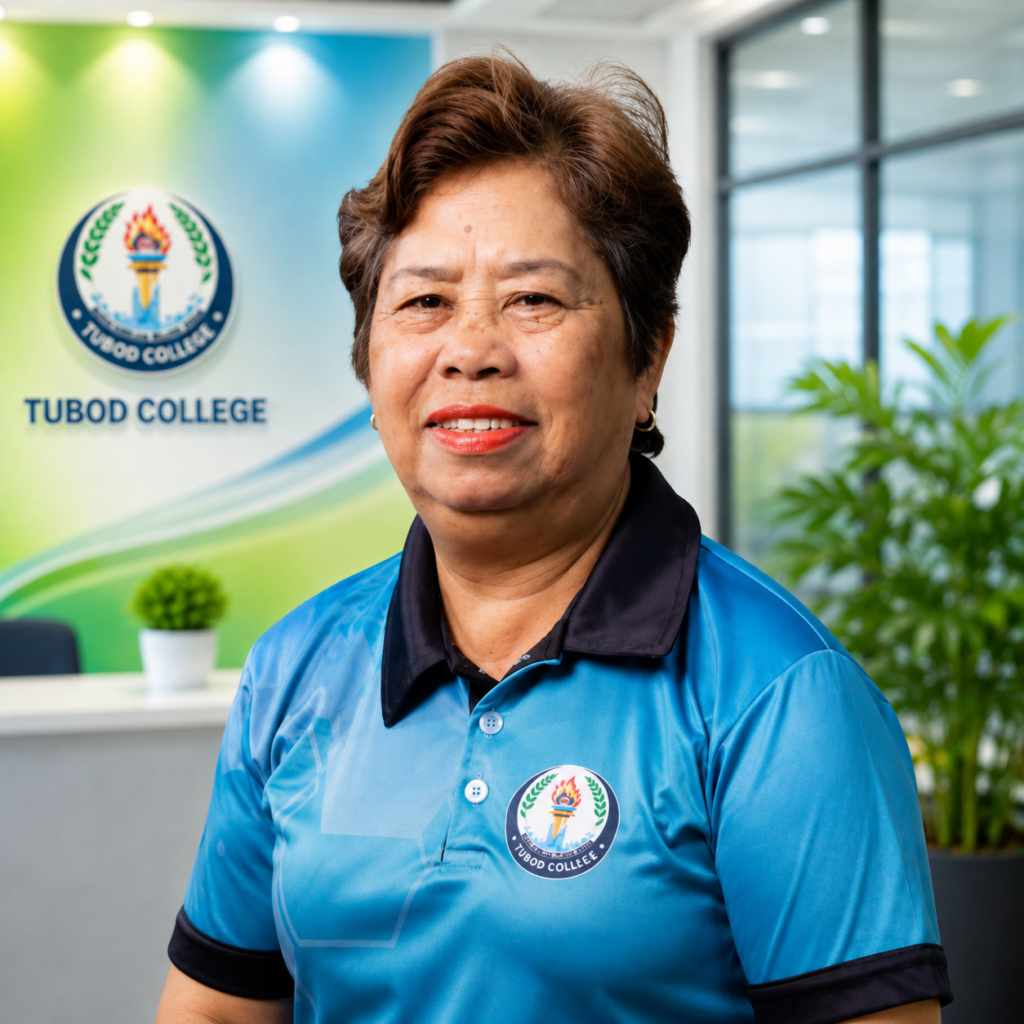
Maxima O. Paclipan
Instructor
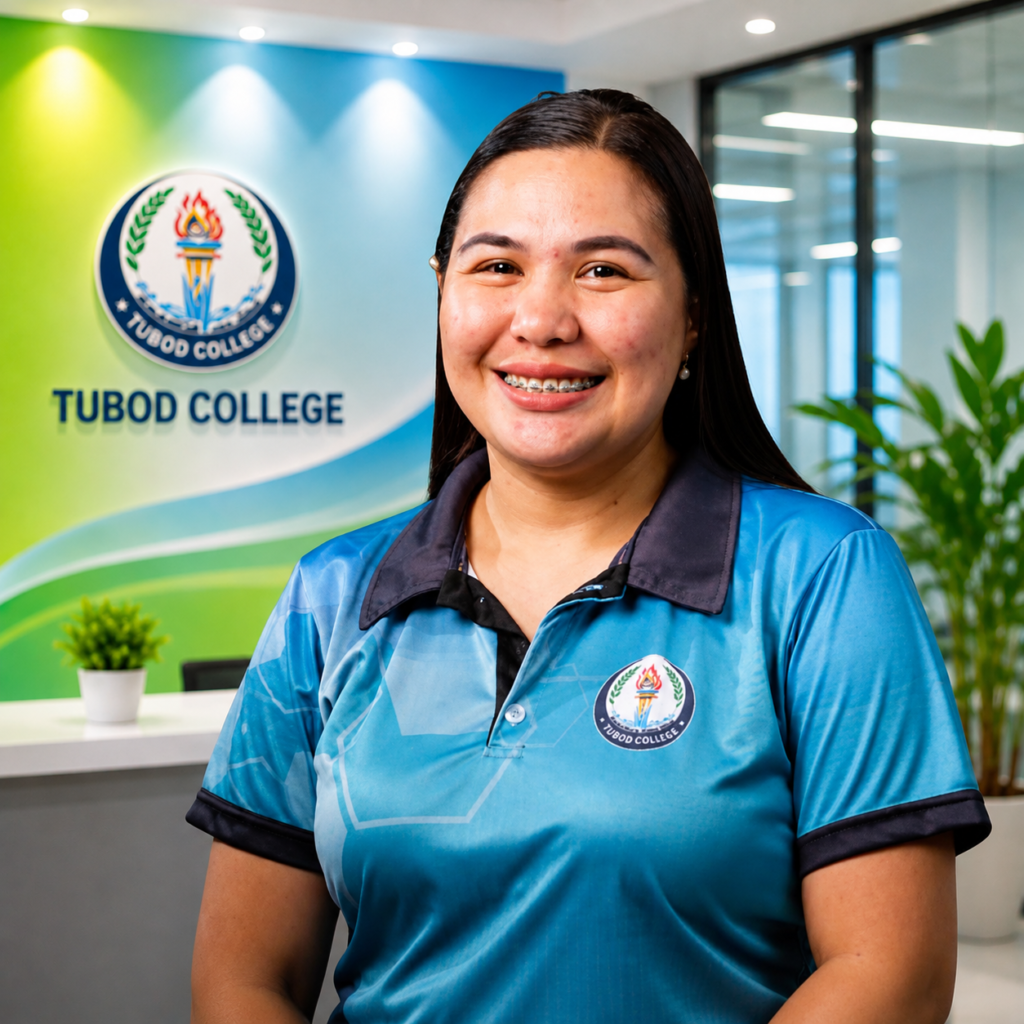
Arianne Riz F. Santos
Instructor
Admission Requirements – Qualifying
The Bachelor of Early Childhood Education (BECEd) Program of Tubod College is a board degree program that prepares students for the Board Licensure Examination for Professional Teachers (BLEPT) and the teaching profession. As such, the program carefully selects applicants who demonstrate academic readiness, good moral character, and a genuine passion for teaching young children. While maintaining high admission standards, the BECEd Program warmly welcomes aspiring educators who are committed to lifelong learning, professional excellence, and making a positive impact on the holistic development of every child and the communities they will serve.
Documentary Requirements
Applicants seeking admission to the Bachelor of Early Childhood Education Program
shall submit the following documents:
- Original Report Card (Form 138) or its equivalent from the last school attended;
- Certificate of Good Moral Character;
- Medical Certificate issued by a licensed physician;
- Drug Test Result from a DOH-accredited testing center; and
- Other admission requirements as may be prescribed by Tubod College.
Admission Qualifications
To qualify for admission to the Bachelor of Early Childhood Education Program, an applicant should satisfy the following qualifications:
- Obtain an overall general average of at least 85% from the last school attended.
- Demonstrate a genuine passion and strong commitment to becoming a future professional educator.
- Successfully pass the program admission interview conducted by the designated faculty or admissions committee.
- Exhibit a positive attitude, good moral character, and a willingness to engage in continuous personal and professional development.
- Manifest commitment to lifelong learning, ethical practice, and professional excellence.
- Show genuine interest, patience, empathy, and enthusiasm in working with young children and promoting their holistic development.
Applicants who meet the prescribed documentary requirements and admission qualifications shall be evaluated in accordance with the admission policies and procedures of Tubod College and the standards established by the Bachelor of Early Childhood Education Program.
Retention Policy for Continuing Students
The Bachelor of Early Childhood Education (BECEd) Program upholds high academic standards to ensure that students continuously develop the competencies, professional dispositions, and ethical values expected of future early childhood educators.
For continuing students, the program requires a General Point Average (GPA) of at least 2.50 every semester to remain in good academic standing, as stipulated in the Tubod College Student Manual, Section 2 (Admission Policy), Subsection 2.15.1.1.1. While the minimum retention requirement is a GPA of 2.50, the program strongly encourages students to strive for a GPA of 2.25 or higher as a benchmark of academic excellence and preparedness for professional practice and the Licensure Examination for Professional Teachers (LEPT).
Students who fail to meet the prescribed retention requirement or who exhibit academic difficulties shall undergo a comprehensive assessment of their academic performance and learning needs. Based on the results of the assessment, the Program Coordinator, in collaboration with course instructors and the Guidance Office, shall implement appropriate intervention strategies to support the student's academic improvement. These interventions may include, but are not limited to:
- Individual academic advising and consultation;
- Mentoring and coaching sessions with faculty members;
- Participation in tutorial or remedial learning activities;
- Development of an individualized academic improvement plan;
- Referral to the Guidance Office for academic and personal counseling, when necessary;
- Regular monitoring of academic progress and classroom performance; and
- Parent or guardian conferences, when deemed appropriate by the program.
The primary objective of these interventions is to assist students in overcoming academic challenges, strengthening their professional competencies, and successfully completing the program. The BECEd Program remains committed to providing a supportive learning environment that promotes student success while maintaining the academic standards expected of future professional educators.
Mission
The Bachelor of Early Childhood Education Program is committed to providing accessible, relevant, and quality teacher education through innovative and learner-centered instruction, research, community engagement, and experiential learning. It develops competent, ethical, and compassionate educators who advocate for children’s rights and holistic development, embrace diversity, pursue lifelong learning, and contribute to sustainable community and nation-building.
Vision
Bachelor of Early Childhood Education Program of Tubod College envisions becoming a center of excellence in preparing early childhood educators toward sustainable transformation.
Core Values
G – Growth Mindset Cultivates passion for lifelong learning, continuous self-improvement, innovation, and reflective practice to enable future educators to adapt to the evolving demands of education and society
U – Unity Promote collaboration, teamwork, respect for diversity, and meaningful partnerships among students, faculty, families, schools, and communities in achieving shared educational goals.
R – Responsibility Uphold professionalism, integrity, accountability, and ethical practice by preparing future educators who are committed to advocating for children’s rights, inclusive education, and community development.
O – Outstanding Service
Inspires excellence through dedicated service, quality instruction, research, extension, and leadership, empowering future educators to make a positive and lasting impact on learners, schools, and society.


Academics & Programs


2690+ Admission






Tubod College Sport & Fitness
Building Strong Bodies, Strong Minds, Strong Futures.
It is concise, inspiring, and reflects the college's commitment to physical fitness, personal growth, and academic success.